Formation of the Universe
IN THE BEGINNING
(13.8 Billion Years Ago)
The age of the universe is estimated to be around 13.8 billion years. This estimate is based on several lines of evidence, including observations of the oldest known stars in the Milky Way galaxy, studies of the cosmic microwave background radiation, and measurements of the abundance of light elements, like hydrogen.The age of the universe can be estimated by observing the oldest known stars and using the principles of nuclear physics to determine how long these stars have been burning hydrogen into helium. These stars, known as metal-poor halo stars, are thought to have formed shortly after the Big Bang, and their ages provide an estimate for the age of the universe.
Another line of evidence comes from the study of the cosmic microwave background radiation, the afterglow of the Big Bang, which has been measured and studied in great detail by various space-based observatories. The observed pattern of fluctuations in the microwave background radiation allows scientists to determine the age, composition, and structure of the universe.
Finally, measurements of the abundance of light elements such as hydrogen and helium provide additional information about the age of the universe. These elements were produced in the first few minutes after the Big Bang, and their relative abundances can be used to determine the age of the universe. While the exact age of the universe may never be known with certainty, the available evidence points to an age of around 13.8 billion years, give or take a few hundred million years.
Theochronic Eon
FIRST CONCEIVABLE EON
(∞ - Big Bang)
The Theochronic Eon extends from an undefined point infinite years ago until the Big Bounce. While typically the Big Bang is accepted by scientists as the point for the formation, or expansion, of the universe, the Big Bounce takes it one step further in asserting that a Big Crunch (an event many scientists anticipate in the future) occurred and was immediately followed by the Big Bang as a previous universe collapsed and the current one was formed.Besides the previous universe, evidence has been detected that suggest that multiple universes may exist in the cosmos today, and the one known to science may have collided with others as many as four times, while other evidence suggests that something outside the universe - possibly another universe - is tugging at objects in the known universe. While there is evidence for the Big Bounce, it is unknown if this was a first-time occurrence or if there has been a long-lasting cycle of bounces.
Very little is currently known about the conditions in this eon, and humanity may never have concise information from this time, so while it is quite possible that life may have existed in the previous universe to some extent and it is highly probable that this time would be divided into several eons if the necessary information existed, it cannot be divided further at this point in time.
SEE ALSO: SOURCE
FIRST 20 MINUTES OF THE UNIVERSE
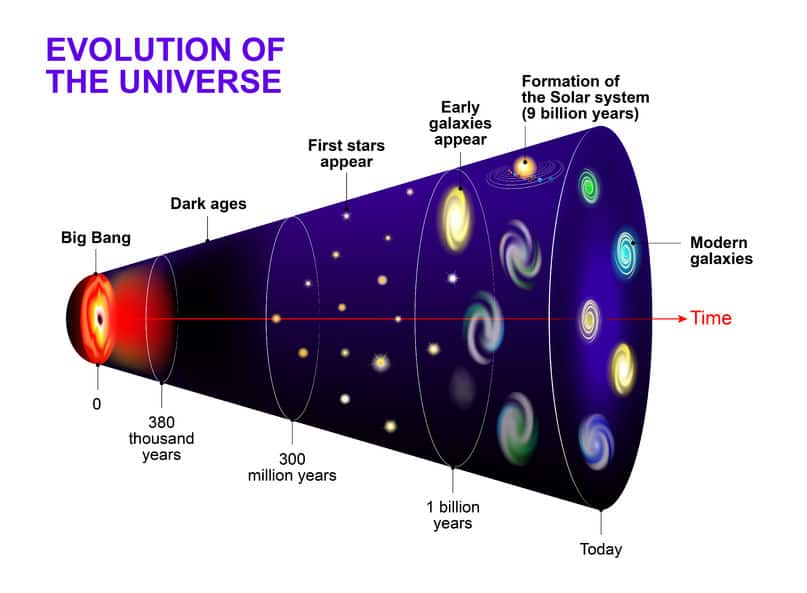
In the first 20 minutes after the Big Bang, the universe underwent several key epochs: the Planck Epock, the Grand Unification Epoch (10^-36 seconds), where fundamental forces were unified; the Electroweak Epoch (10^-12 seconds), marking the separation of weak and electromagnetic forces; the Quark Epoch (10^-12 to 10^-6 seconds), forming protons and neutrons; the Hadron Epoch (1 second), forming atomic nuclei; the Lepton Epoch (10 seconds), dominated by leptons; and the Photon Epoch (380,000 years), when the universe was filled with radiation, setting the stage for further cosmic evolution.
THE EPOCKS
Ongoing Evolution of the Universe
MATTER DOMINATION
(47,000 - 5 Billion Years after Big Bang)
Matter, rather than radiation, became the dominant component in determining the universe's dynamics.PRECELESTIAL PERIOD
It is important to note that that Precelestial, Paleocelestial, and Mesoproteimeran are all proposed, yet unconfirmed, names for these time periods in early cosmic history. While not formally scientific, these names help to distinguish between the unique stages, transitions, and characteristics of our beginning universe.
(13798-13600 BYA)
The universe during this time was characterized by extremely high temperatures and densities. Fundamental particles like quarks and gluons formed protons and neutrons, while cosmic inflation smoothed out irregularities in the universe.As the universe cooled, forces began to decouple, leading to the formation of hydrogen and helium nuclei in a process called nucleosynthesis. The period culminated with recombination, where electrons combined with nuclei to form neutral atoms, releasing cosmic microwave background radiation, which marks the transition to a more structured universe with stars and galaxies.
DECOUPLING
(380,000 Years after Big Bang)
Decoupling marked the moment when protons and electrons combined to form neutral hydrogen atoms, allowing photons to travel freely. This release of photons created the Cosmic Microwave Background (CMB), a faint glow of light that fills the universe and carries crucial information about the early universe's conditions. Studying the CMB helps scientists understand the universe's age, composition, and how galaxies and other cosmic structures began to form.COSMIC MICROWAVE BACKGROUND RADIATION
(380,000 Years after Big Bang)
The Cosmic Microwave Background (CMB) radiation is leftover heat from the Big Bang. It's the oldest light we can see in the universe, dating back to about 380,000 years after the Big Bang when the universe cooled down and atoms could finally form. The CMB is mostly uniform, but tiny temperature differences give us clues about how galaxies and other cosmic structures started to form.PALEOCELESTIAL PERIOD
(13600-13550 BYA)
The Paleocelestial Period refers to the era in cosmic history when the universe was approximately 380,000 years old. During this time, the universe had cooled sufficiently for neutral atoms to form, marking the transition from a hot, opaque plasma to a transparent universe filled with radiation. This period is crucial because it allowed the first light, known as the cosmic microwave background radiation, to travel freely across space, carrying valuable information about the early universe's conditions and structure.THE DARK AGES
(380,000 - 150 Million Years Later)
No stars or galaxies had yet formed. During this time, the universe was filled with neutral hydrogen and helium gas, and there were no sources of visible light. This phase ended with the formation of the first stars and the beginning of cosmic structure formation.MESOPROTEIMERAN ERA
13550-4680 BYA
The Mesoproteimeran Era is the second era of the Proteimeran Eon. It begins with the formation of the first galaxies and ends with the dispersal of the solar nebula within the Giant Molecular Cloud. This era spans a significant portion of the universe's history, covering 64.5% of it, and encompasses the development of most galaxies, including the Milky Way, marking the formation of the solar system.STARS AND GALAXIES FORM
(100-200 Million Years After Big Bang)
The first stars, known as Population III stars, were massive and composed primarily of hydrogen and helium, lacking heavier elements. Their formation marked a pivotal moment in cosmic history, influencing the subsequent evolution of galaxies and enriching the universe with the elements necessary for the formation of future generations of stars and planets.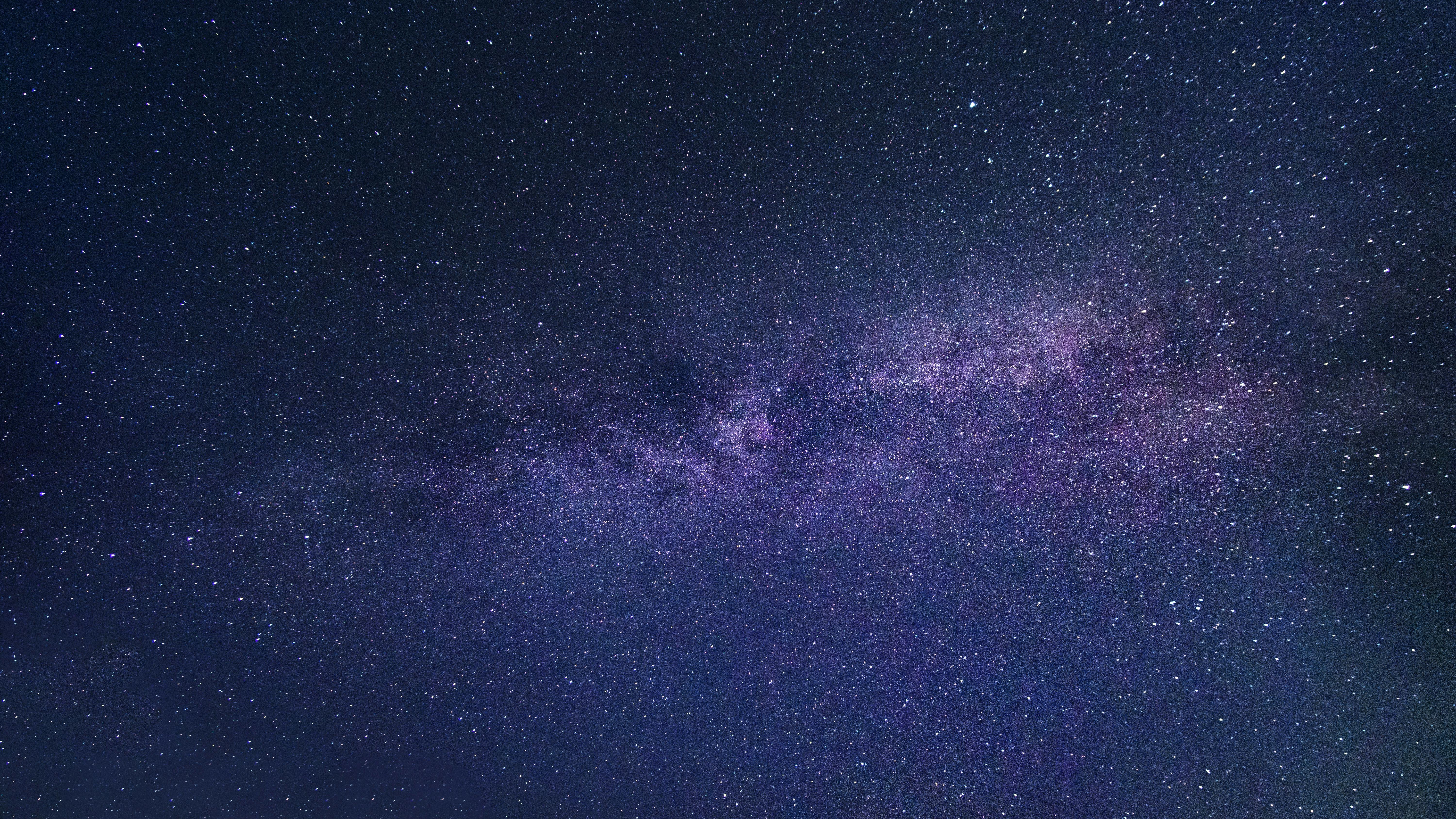
REIONIZATION
9150 Million - 1 Billion Years After Big Bang)
Reionization marks the phase when the neutral hydrogen gas that dominated the universe after Recombination began to be ionized again. This process was driven by the intense ultraviolet radiation emitted by the first stars and galaxies. As these sources of radiation ionized the surrounding gas, neutral hydrogen atoms were split into protons and electrons, making the universe transparent to ultraviolet light once more. Reionization played a crucial role in shaping the structure of the universe by influencing the formation and evolution of galaxies and other cosmic structures.
Hadean Eon
(4600 BYA - 4000 BYA)
The Hadean Eon represents the foundational stages of Earth's formation and the establishment of its early environment.
FORMATION OF THE EARTH
FORMATION OF THE EARTH
(4.6 BYA)
The term "proto-Earth" refers to the early Earth during its initial stages of formation. The proto-Earth was a growing planetary body that emerged from the accretion of dust, gas, and smaller planetesimals in the early solar system. The proto-Earth collided with another planetary body called Theia. This collision ejected debris into space, which later coalesced to form the Moon.The proto-Earth underwent intense bombardment from asteroids and comets, causing its surface to melt. This created a hostile environment constantly bombarded by frequent impacts. Over time, this process led to the formation of a primordial atmosphere and the beginnings of oceans on Earth.
As the Earth cooled over millions of years, the heavy bombardment decreased, allowing for the formation of a solid crust. Water vapor released from volcanic activity and impacts eventually condensed into vast oceans, covering the planet's surface. These early oceans played a crucial role in shaping Earth's geology and chemistry, setting the stage for the emergence of the first life forms.
FORMATION OF THE MOON
(4.53 BYA - 3.92 BYA)
The Pre-Nectarian Period refers to the earliest phase of lunar history, spanning from approximately 4.55 to 3.92 billion years ago. During this time, the Moon underwent significant geological activity, including intense cratering and volcanic processes.The name "Pre-Nectarian" comes from the Nectarian System, a geological period characterized by widespread basaltic volcanic flows and the formation of large impact basins on the Moon's surface. The Pre-Nectarian Period predates these significant volcanic and impact events, marking an important phase in the Moon's early evolution.
(3.92 BYA - 3.85 BYA)
3.85 - 3.2 BYA
Characterized by significant volcanic activity and the formation of large lunar maria, or seas, from basaltic lava flows. This period saw continued impact events shaping the lunar surface and contributed to the development of a regolith layer. The Imbrian Period marks a crucial phase in lunar geology, highlighting ongoing geological processes that shaped the Moon's surface features and laid the foundation for its current appearance.(3.2 BYA - 1.1 BYA)
The Eratosthenian Period is marked by a decline in volcanic activity and the formation of fewer, smaller impact craters compared to earlier periods. This period is distinguished by the lack of rays around craters, as the material ejected during impacts has weathered and darkened over time.1.1 BYA - Present
Archean Eon
(4 BYA - 2.5 BYA)
One of the most significant events of the Archean Eon was the formation of the first continents, which were composed of granite and other types of rocks that were lighter than the basaltic crust of the early Earth. These continents provided a stable platform for the development of life and helped to create the conditions that eventually led to the emergence of complex organisms.
The Archean Eon was also a time of intense volcanic activity, which released large amounts of gases into the atmosphere and created new landmasses. This period was critical in shaping the geological and environmental conditions that would eventually lead to the evolution of life on Earth.
The Archean Eon, spanning from about 4 billion years ago to 2.5 billion years ago, is not formally divided into periods like some later eons in Earth's history. Instead, geological events and changes during the Archean are typically categorized into less specific intervals based on key developments rather than distinct periods. However, some geologists and researchers have informally described certain stages or phases within the Archean based on major geological and biological milestones. These stages may include:
2.7 BYA
These microorganisms were among the first to perform oxygenic photosynthesis, a process that produces oxygen as a byproduct. Over time, the oxygen released by cyanobacteria began to accumulate in the atmosphere, leading to the Great Oxidation Event (GOE) around 2.4 billion years ago.Proterozoic Eon
(2.5 BYA - 541 MYA)
An era in Earth's history marked by geological, environmental, and biological changes. It witnessed the stabilization and growth of the Earth's continental crust, along with the formation and breakup of supercontinents. Atmospheric conditions saw dramatic shifts, including the Great Oxidation Event, which significantly increased oxygen levels due to early photosynthetic organisms.The Proterozoic also experienced several glaciations, impacting global climate and ocean chemistry. Biologically, this eon saw the emergence and diversification of complex single-celled organisms and, towards its end, the appearance of the Ediacaran biota, marking the prelude to multicellular life. Tectonic activity shaped landscapes through mountain building and volcanic activity, setting the stage for the Cambrian explosion and the dawn of the Phanerozoic Eon, which brought forth rapid diversification of life forms on Earth.
PALEOPROTEROZOIC ERA
2.4 BYA
The Great Oxidation Event (GOE) was a pivotal period in Earth's history when oxygen levels in the atmosphere significantly increased due to the photosynthetic activity of cyanobacteria. These microorganisms developed the ability to perform oxygenic photosynthesis, converting sunlight, water, and carbon dioxide into glucose and oxygen.The oxygen produced by cyanobacteria gradually accumulated in the atmosphere, leading to major ecological and geological changes, including the formation of the ozone layer and enabling the evolution of aerobic life forms. This event marked a fundamental shift in Earth's environment and set the stage for the development of complex life.
2.4 - 2.1 BYA
One of Earth's earliest and longest ice ages. This glaciation is believed to have been triggered by the Great Oxidation Event, which led to the reduction of greenhouse gases like methane. The resulting global cooling caused extensive ice sheets to cover much of the planet. Evidence of the Huronian Glaciation is found in glacial deposits and striations on ancient rocks, marking a critical period in Earth's climatic and atmospheric evolution.2.5 - 1.8 BYA
Banded iron formations (BIFs) are distinctive layered sedimentary rocks that primarily formed during the Paleoproterozoic Era. These formations consist of alternating layers of iron-rich minerals and silica-rich chert. BIFs were created in ancient oceans as a result of the increased oxygen production by cyanobacteria during the Great Oxidation Event. The oxygen reacted with dissolved iron in the oceans, causing the iron to precipitate out and settle on the ocean floor. BIFs provide crucial evidence of early atmospheric and oceanic changes, marking a significant shift in Earth's environmental conditions.1.8 BYA
During the Paleoproterozoic Era, the Earth's landmasses underwent significant reconfiguration with the formation of the supercontinent Columbia (Nuna). This supercontinent formed through the collision and amalgamation of smaller cratons and continental fragments driven by tectonic movements. Intense geological activity, including mountain-building events, shaped the Earth's topography and stabilized the continental crust.Columbia (Nuna) was composed of cratons (stable interior portions of continents) that are now part of modern continents like North America, South America, Africa, etc.
MESOPROTEROZOIC ERA
(1.3 BYA - 1.1 BYA)
Rodinia was formed through a process involving the collision and accretion of smaller landmasses. This led to the creation of a vast landmass that encompassed most of the Earth's continental crust.(1.1 BYA)
The Keweenawan Rift event was characterized by significant volcanic activity and the formation of extensive basaltic lava flows. This major geological rift event was associated with the breaking apart of continental crust, leading to the creation of large rift valleys and contributing to the dynamic geological landscape of the Mesoproterozoic. The Keweenawan Rift left behind geological features that are still studied today.NEOPROTEROZOIC ERA
(1,000 - 541 MYA)
The Neoproterozoic Era, the final era of the Proterozoic Eon. This era is particularly significant for its major geological, climatic, and biological events, which set the stage for the explosion of life in the Cambrian Period. The Neoproterozoic era is comprised of the Tonian period, the Cryogenian, and the Ediacaran.Phanerozoic Eon
FIRST PLANTS AND ANIMALS
(538.8 MYA)
PALEOZOIC ERA
MESOZOIC ERA
CENOZOIC ERA
Prehistoric Era
(2.5 MYA - 1,200 B.C.E.)
THE STONE AGE
THE BRONZE AGE
THE IRON AGE
FIRST CIVILIZATION
MESOPOTAMIA
4000 B.C.E.
The world's first civilization is widely considered to be ancient Sumer, which emerged in Mesopotamia (present-day Iraq).MAJOR ADVANCEMENTS
ANCIENT EGYPT
(FORMED AROUND 3000 B.C.E.)
The ancient Egyptian civilization is one of the oldest and most fascinating in human history. It is believed to have begun around 3100 BCE, when King Menes unified Upper and Lower Egypt into a single kingdom. This event is considered to be the beginning of the First Dynasty of Egypt.